
Building for the future means working with nature
Last December saw the landmark global agreement of the Global Biodiversity Framework at COP15 in Montreal. Its headline mission is to halt and reverse the loss of nature by 2030.


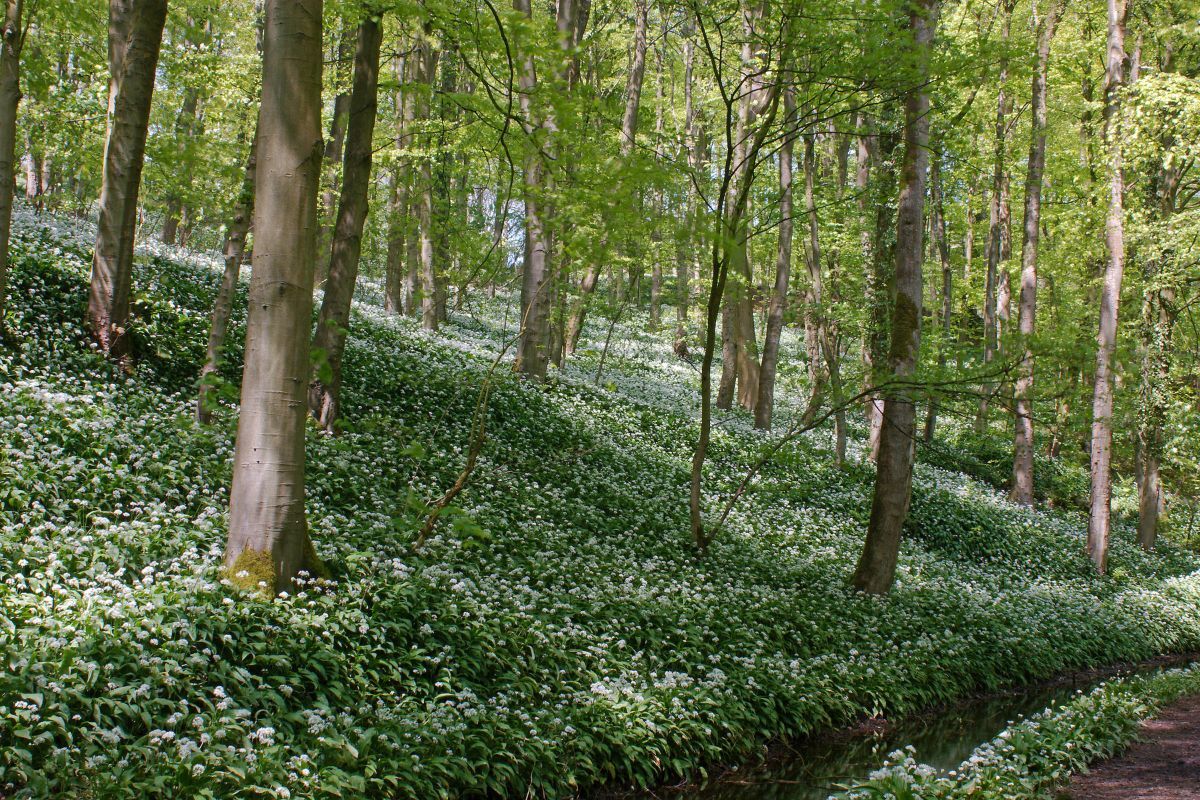
This is a clear call to not just ‘do less harm’ but to actively bend the curve on nature loss and restore healthy functioning ecosystems on which we all depend. Since COP15, there has been increasing business interest in restoring nature, following growing understanding that nature loss isn’t only devastating in its own right, but is an existential threat to us all. There’s no society, and certainly no business, on a dead planet. The nature crisis is just as serious in the UK, as one of the most nature-depleted countries in the world.
The climate and nature crises are deeply interrelated. The recent IPCC report highlights reducing conversion of natural ecosystems as one of the most impactful climate mitigation measures. Natural ecosystems aren’t just important carbon stores, but also help build resilience to the impacts of climate change – like helping alleviate flooding and cooling down urban areas. Nature connection is also important for our wellbeing – a recent poll by the Woodland Trust revealing high levels of eco-anxiety in young British people found that being outdoors in nature helped mental wellbeing. Meanwhile, climate change exacerbates nature loss.
How can we make sense of these global crises in the context of local development or individual schemes? How can development schemes best respect nature and contribute to a resilient, healthy future where we can all thrive? Where schemes are sited and how they are designed around nature can make a big impact.
Nature is complex and specific to its local context: we need to work with existing nature in line with the mitigation hierarchy, and always protect irreplaceable habitats. We need to protect and restore what we already have, and create new habitats that buffer, extend and connect existing habitats to support healthy, functioning ecosystems. Whether it’s an established tree or undisturbed ground, biodiversity and ecological functioning has developed and become more complex over time. We must also follow the precautionary principle that respects that there’s much we don’t know about nature – given the stakes, we can’t afford to gamble with tipping points and unintended consequences.
From September, developments will be mandated in England to deliver at least 10% Biodiversity Net Gain in accordance with Natural England’s Biodiversity Metric. This needs to be seen by developers as an opportunity to help guide beautiful schemes that support healthier and more resilient communities – not as a burden. Designing-in nature from the earliest stage – from scheme siting – is key to delivering best outcomes for nature. This can also lower costs and improve the likelihood of landscaping establishment. Also consider setting a greater ambition: perhaps 20% Biodiversity Net Gain or setting a 30% canopy cover target.
Schemes should be sited in the first place to respect existing nature and important wildlife corridors. Don’t be the scheme that splits an important habitat into fragments that are no longer viable in smaller parts – habitats need to be big enough, good enough (quality), and connected to support wildlife populations. The new requirement (from the Environment Act) in England for Local Nature Recovery Strategies (by a ‘responsible authority’, usually County Council or similar) will identify where existing nature is, or could be, to help with screening. Investments in nature should also support making existing sites bigger, better and more connected.
On your site, protect existing nature – and always protect irreplaceable ancient woods and veteran trees. Ancient woodlands, continuously covered since at least 1600AD (in England), are irreplaceable due to the complex ecological functioning that has developed over hundreds of years, and which affords complex habitat to a wide range of species. In line with Natual England’s Standing Advice, ancient woods should have a buffer of at least 15 metres. However, if harm is to be avoided, in many cases this should be more. Ancient and veteran trees are those in their final life stage (or with final life stage features, like a hollow trunk) are biodiversity havens and can be thousands of years old. They are a rich heritage, with more in the UK than in the rest of Europe. Protection is not just about the individual tree but understanding it as an ecosystem in its own right. To avoid direct impacts, such trees should have a Root Protection Area with a radius of at least 15 times the diameter of the tree, or 5m beyond the crown. Indirect impacts may require a wider protection area. The Ancient Tree Inventory is a citizen science project to help identify where these invaluable trees are – but is not comprehensive, so site surveys remain crucial.
Maximise biodiversity across your site. Think about how you can introduce different native species – for example by planting a mixed, not single-species, hedgerow. Think about structural diversity too – foster interesting nooks and crannies that support different species at different levels – from ground flora to shrubs and then the tree canopy. Value deadwood – it’s incredibly rich in biodiversity – and leave it standing for invertebrates and other wildlife that depend on it. Perhaps there’s an opportunity to help residents connect to nature through learning – consider a wildlife educational area, or how residents can help with maintenance.
It’s crucial to think about biosecurity: we simply won’t reach Net Zero or reverse the loss of nature without healthy trees and plants. Tree diseases are wreaking havoc across the UK landscape, and many diseases are imported. Consider specifying native UK & Ireland Sourced and Grown trees in your landscaping, while also supporting the local nursery sector. We also need to better value naturally regenerating trees and plants, which improve genetic diversity: self-seeded oaks, for example, will be better adapted to local conditions and more resilient to impacts of climate change and disease than introduced plants.
The grave state of nature – and its role in helping address the climate crisis – means we must all play our part in bending the curve on nature loss. No site is too small; every scheme must design-in nature. The housing sector also needs to look beyond individual schemes – and to sourcing, wider value chains, and whole sector impact – to identify where it can best act to help reverse nature loss.
Heather Elgar is Lead policy advocate, corporate policy at The Woodland Trust


- © Ocean Media Group